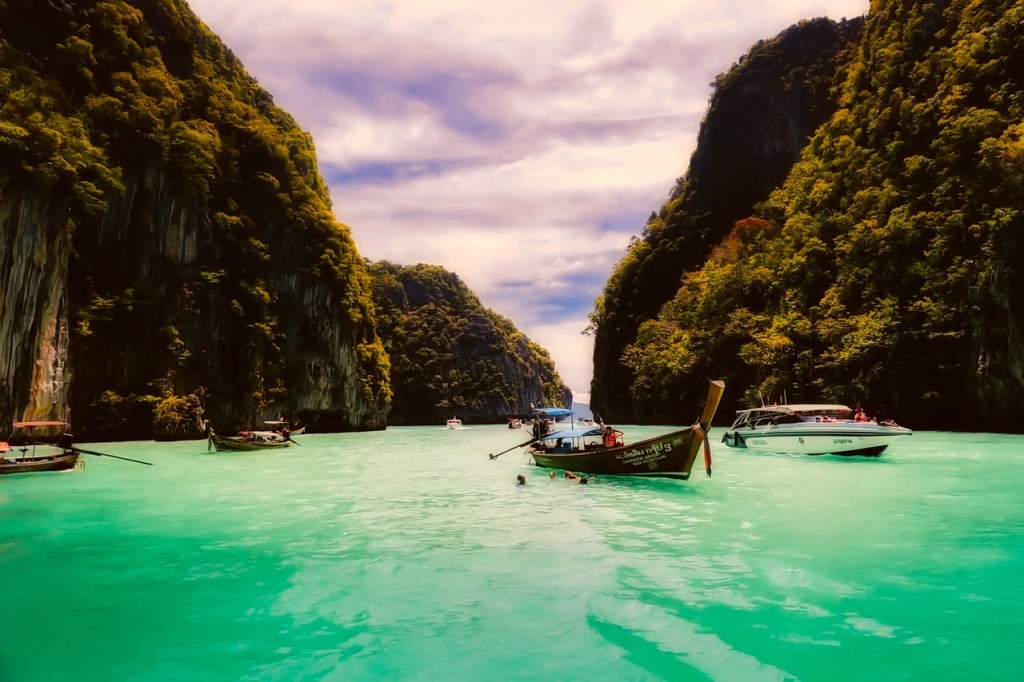
Thailand’s tropical climate demands a unique approach to perfumery. While perfumery in other parts of the world often indulges in rich, sweet and dense fragrances, the heat and humidity of Southeast Asia call for lighter, fresher alternatives. In this interview, Gahn Yongyueangpan, who grew up in Chiang Mai and now lives in California, shares his insights into the world of Thai perfumes and offers his perspective on how cultural factors and climate influence scent preferences.
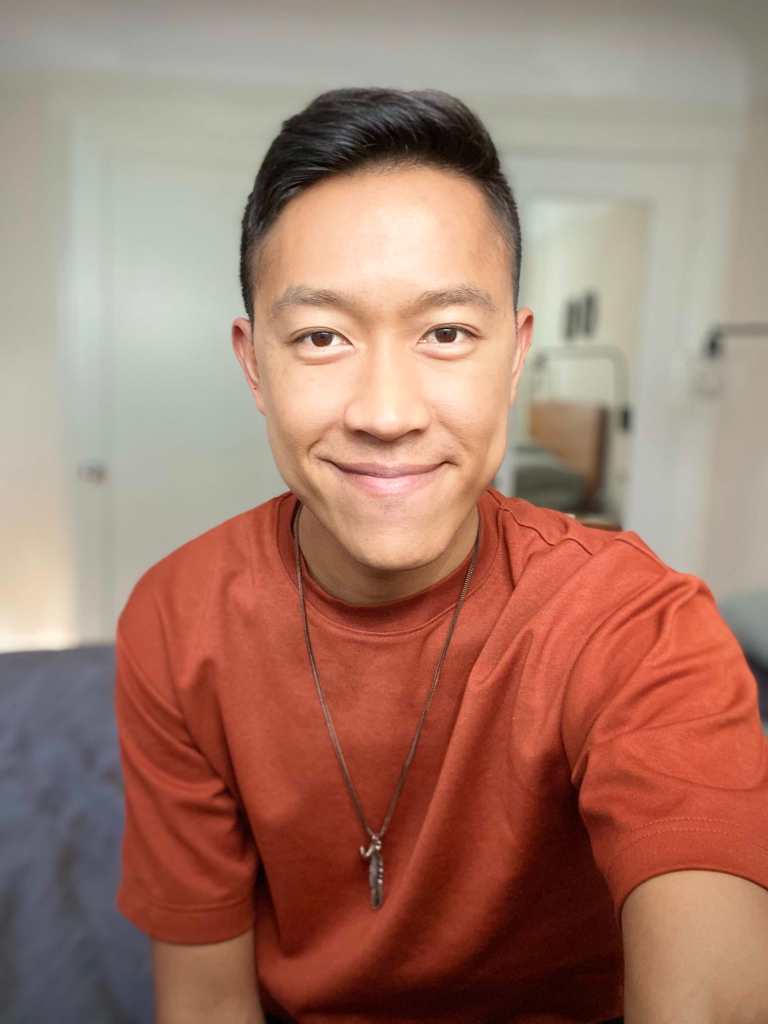
From the allure of local ingredients to the challenges of choosing the right fragrance for a tropical environment, Gahn provides a fascinating glimpse into the heart of Thai perfumery. Whether you’re a seasoned fragrance enthusiast or simply looking to expand your olfactory horizons, I hope this interview will inspire you to explore.
How did you first discover your love of perfume?
My first memories of perfume come from my mom. She worked at a bank and wore perfume to the office. I could still smell it in the morning when she left, and later when she came home. She wore Chanel No. 5 and Coco. I remember seeing those bottles on her makeup table. Sometimes, I’d sneak a spray after she left for work.
In my early teens, I got into colognes. Cheap ones for kids, you know? My friends and I would share them with each other at school. I remember taking one of my mom’s perfumes, Pleasures by Estee Lauder, to school. It was new then, and I thought it was really cool.
I also loved saving those perfume strips in magazines. Department stores felt kind of scary, and we didn’t visit them often, so those strips were my way to explore different scents.
Clinique Happy for Men was one of the first perfumes I bought myself. I liked how fresh and fun it smelled.
How did you get interested in exploring and understanding Thai perfume traditions?
My interest in Thai perfume started during the COVID-19 pandemic when I began collecting fragrances. I stumbled upon an article about a Thai perfume brand, PROAD, on Fragrantica and realized there was a whole world of Thai perfumery I didn’t know much about. After the pandemic, I visited Thailand and had the chance to explore local brands firsthand. It’s been fun to see the blossoming of Thai perfumery in recent years.
This experience made me think about how cultural shifts can impact consumption habits. I wrote a paper in college about coffee culture in Thailand, which was booming around the same time. Both coffee and perfume were seen as luxury items initially, but now they’re becoming more accessible. It’s interesting to see how these cultural shifts parallel each other. No one is born knowing how to make a latte or how to wear perfume: it’s learned behavior and it’s cultural.
It’s also interesting to see how the internet has played a role in demystifying the world of perfume. Information and raw materials that were once only accessible to perfume experts are now accessible to more people. People can teach themselves to make perfume.
Thai perfume culture differs from Western and Middle Eastern. Can you elaborate on what makes Thai perfumery unique?

Fragrance is an important part of Thai culture and has been for a long time. We use fragrance in many forms. It’s common to put jasmine in the water in the refrigerator to make it smell good and taste refreshing. When I think of Thailand, I think of the smell of lemongrass and kaffir lime, which are not only used in cooking but are also often left out in cut pieces for their smell.
When it comes to perfume preferences in Thailand, a lot of it is driven by practicality. It’s hot and humid, and people sweat more. Perfume projects more in these circumstances. You also have to think about how the smell of your perfume will combine with the sweat. For all these reasons, the people I know tend to prefer light, fresh scents. They use splash scents more often than the spray or oil perfumes popular in other parts of the world. The big, heavy oud and rose perfumes popular in the Middle East or the sweet, gourmand ones in the West just don’t work as well in Thailand.
Beyond practical issues, culture also plays an important role in perfume choices. I mentioned that jasmine is important, culturally; however, it’s not popular in Thai perfume. The reason is because it’s heavily associated with traditional culture and temples ceremonies. It’s not seen as chic or modern. People I know in Thailand also generally don’t like to smell like food. Gourmands are popular in the U.S. and people often ask me to look for mango sticky rice perfumes from Thailand. You can definitely find fragrances like this made by Thai perfume brands, but most of the customers who buy it are from outside Thailand.
Are there any specific ingredients you see used in Thai perfumery that are not often found elsewhere?
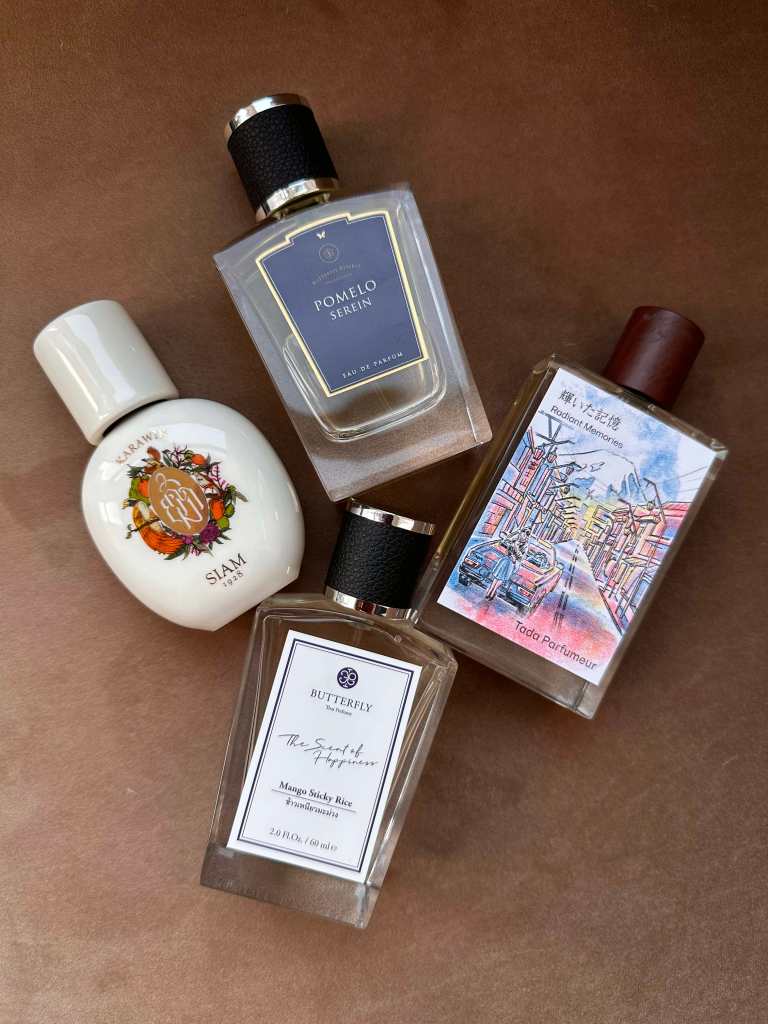
Thai oud is unique and smells like nothing else. The way Thai people tend to use oud in perfume is also distinct. In Middle Eastern perfumery, the oud is often strong, animalic, and earthy. In Thailand, you more often see oud used in a way that brings out its sweet, woody, and honeyed facets. There’s a brand called Siam 1928 that does this really well.
I’ve noticed that Thai perfumers often adapt certain notes to resonate with local tastes. For example, mango is a well-loved fruit in Thailand and appears in various forms in Thai perfumes. Some notable examples include Salted Green Mango from Strangers Perfumery, Karawik from Siam 1928, Mango Sticky Rice from Journal, and Bangkok Paradise from MITH. These fragrances showcase mango in different interpretations, reflecting the Thai appreciation for the fruit in its many varieties. There’s also a brand called KengSoHigh producing Durian Velvet, which uses durian. I grew up eating durian and it’s a fruit that’s notorious for its pungent smell. For me, it’s nostalgic, but there are hotels in Thailand with “no durian” policies because of their smell.
Let’s talk about Parfums Dusita.
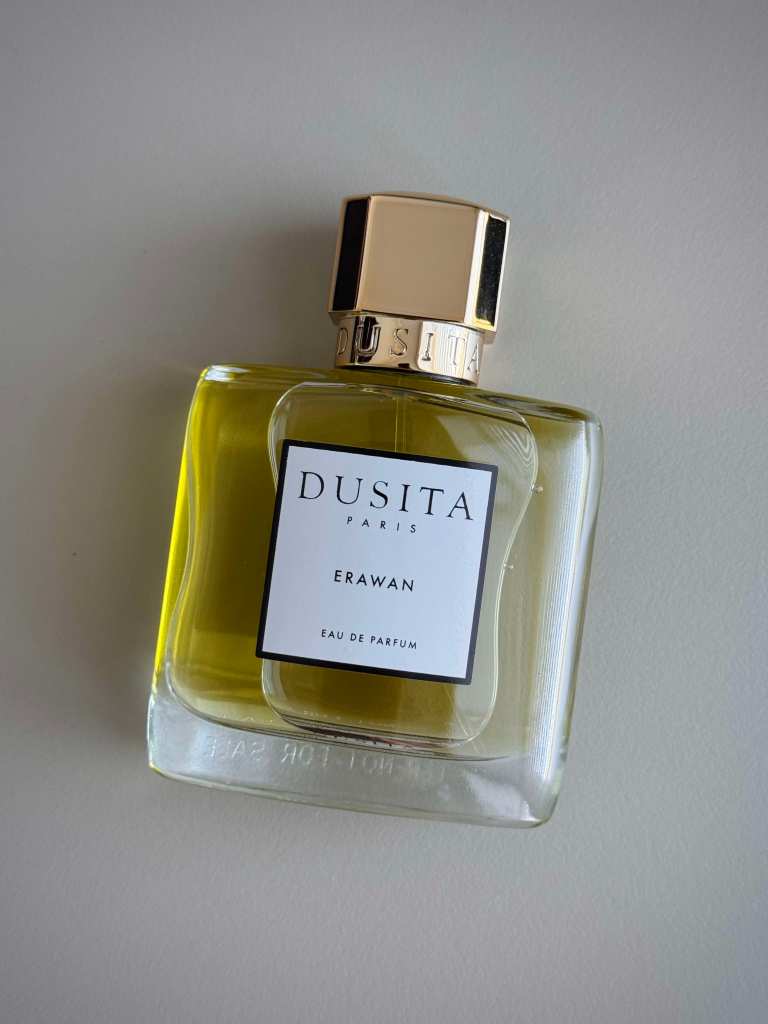
I love how Pissara Umavijani of Parfums Dusita, or Ploi as she’s known in Thailand, has managed to blend her Thai heritage with French perfumery techniques. I see her Thai background come out in the choice of raw materials, the names she gives her perfumes, and the stories behind them. One of my favorites is Erawan, which is named after the elephant. In Thailand, the elephant is a symbol of strength, grace, and cultural heritage. This fragrance beautifully reflects the essence of elephants, with its rich and refreshing green notes. The other one I really like is Moonlight in Chiangmai, which uses teakwood and citrus. Montri, named after Pissara’s father, is good too. It reminds me of walking in an elegant wooden home in Thailand with a classic vibe.
For someone interested in exploring Thai perfumes, what would you recommend?
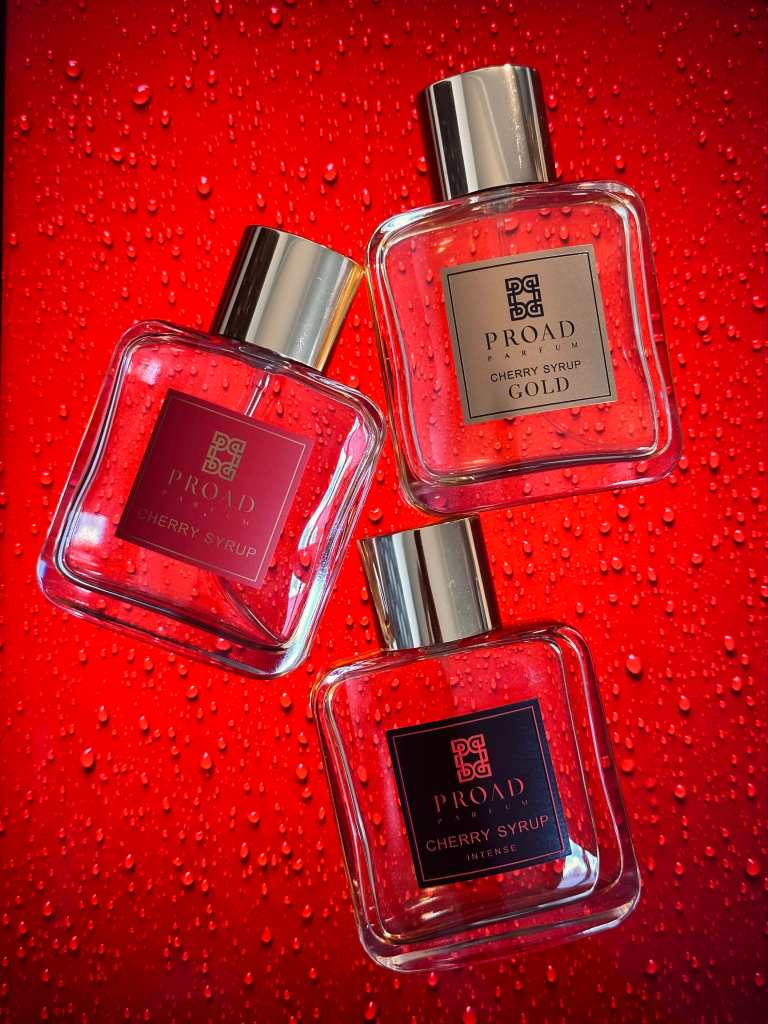
Thailand’s perfume scene has exploded in recent years. There are tons of new brands popping up, and it’s an exciting time to be a fragrance enthusiast there. MITH, PROAD, Prin, and Prann are some of the bigger names to look out for.
I’d recommend checking out Rebellion Lab and Perfume Bar in Bangkok. They carry a great selection of local and international brands. There are also smaller, independent brands like Journal and Butterfly that are worth exploring.
If you can’t make it to Thailand, you can find some Thai brands online through retailers like LuckyScent and ZGO Perfumery.
Ultimately, I’d encourage people to be open-minded and explore the world of Thai fragrance. And if you have questions, please reach out to people like me in the online fragrance community. There are some really interesting and innovative things happening in Thai perfumery and I want more people to experience them.
Gahn Yongyueangpan is the owner of Glin Dee Fragrances, a company that is the official U.S. distributor for a number of Thai perfume brands.
The headshot and perfume images have been provided courtesy of Gahn. The landscape photo is a royalty free image from Pixabay.
Like what you read here? Please like, comment or share this post. Please consider subscribing too!


 Fragrances With Friends