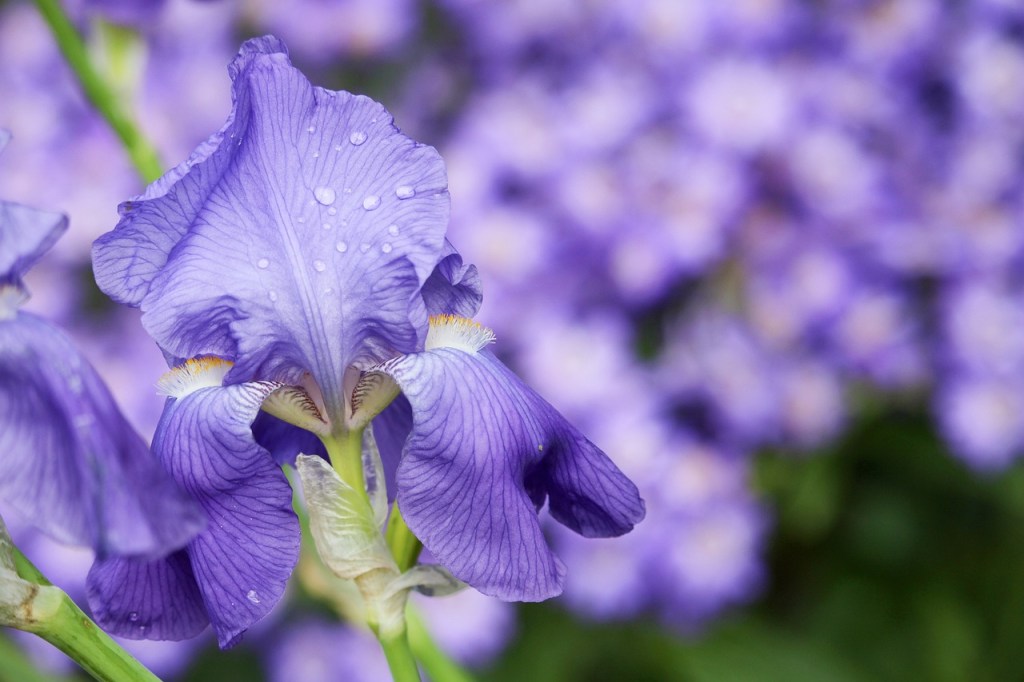
Where most people have marrow running through their bones, John Van’s bones encase a thin line of iris butter.
Iris has captured John’s imagination in perfumery like no other fragrance note. His passion for this perfume ingredient is something I’ve rarely seen equaled.
In this Fragrances With Friends interview, John shares the characteristics of iris that draw him in, the expressions of iris he appreciates most, and his favorite iris perfumes. He also shares what he’s learned about how irises are harvested and transformed from commonplace flowering plants into one of the most luxurious and expensive perfume ingredients.
Read with caution. John’s enthusiasm for iris might be contagious.
What draws you to the iris note in perfumery? Which characteristics do you find particularly appealing?

The iris (or orris) note is special to me: I love its versatility and expressiveness. It can be creamy, buttery, and warm, like a comforting embrace. On the other hand, iris can also come across as cold, rooty, and powdery—proud and distant as a statue in a museum.
Some people consider iris an “old lady” fragrance note, but what they’re describing is just a nostalgic, vintage interpretation of iris that was popular in the golden age of perfumery. There are so many other possibilities. In recent years, a creamy, almost gourmand version of iris has become very popular in perfume. In addition, many perfumers like to play with the steely, other-worldly aspects of iris, particularly in indie and niche perfumes. The last thing I would call these perfumes is “old ladyish.”
Iris’ scent profile offers perfumers vast opportunities for artistic expression. I could never become bored of wearing it. I can find an iris perfume to wear in any season and in any mood.
How are irises harvested and turned into a perfume ingredient?
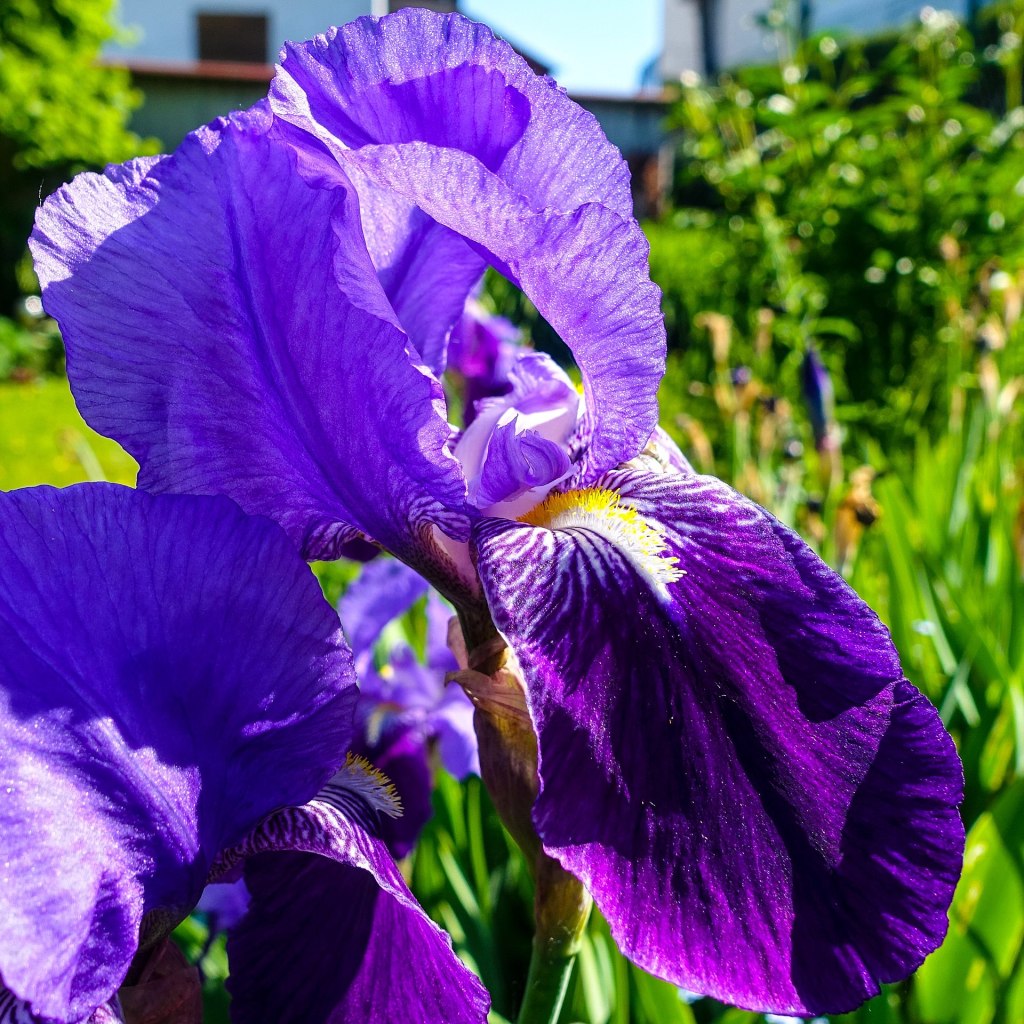
By Georg Buzin – Own work, CC BY-SA 4.0
Irises are cultivated for perfumery all over the world, but primarily in regions like France, Italy, Morocco, and China. The most common types used are iris pallida and iris germanica.
The valuable part of the plant used in perfume is the root or rhizome, which, after harvesting, undergoes a lengthy drying process of two to four years. This drying period is crucial for the development of aromatic compounds, particularly a group of molecules known as irones.
The dried rhizomes are then ground into a fine powder and distilled into a solid essence called iris concrete (also called iris butter) or extracted into a resinoid using solvents. Iris absolute can be derived from iris concrete through fractional distillation. The concentration of irones in the final product significantly impacts its quality and fragrance profile. For example, the dry-aged iris root may have up to 15% irones, the most luxurious iris concrete may have up to a 20% concentration, and iris absolute can have as much as 80%.

By Lucien Mahin – Own work, CC BY-SA 3.0
Iris is an incredibly expensive raw material, and you can see why. It takes a ton of iris root to make just a few kilograms of concrete, and the whole process requires an incredible amount of time and labor. If you want to learn more, I recommend reading Jamie Frater’s primer on iris naturals.
How does the iris note complement other fragrance notes in a perfume? Are there any pairings that you find particularly effective?
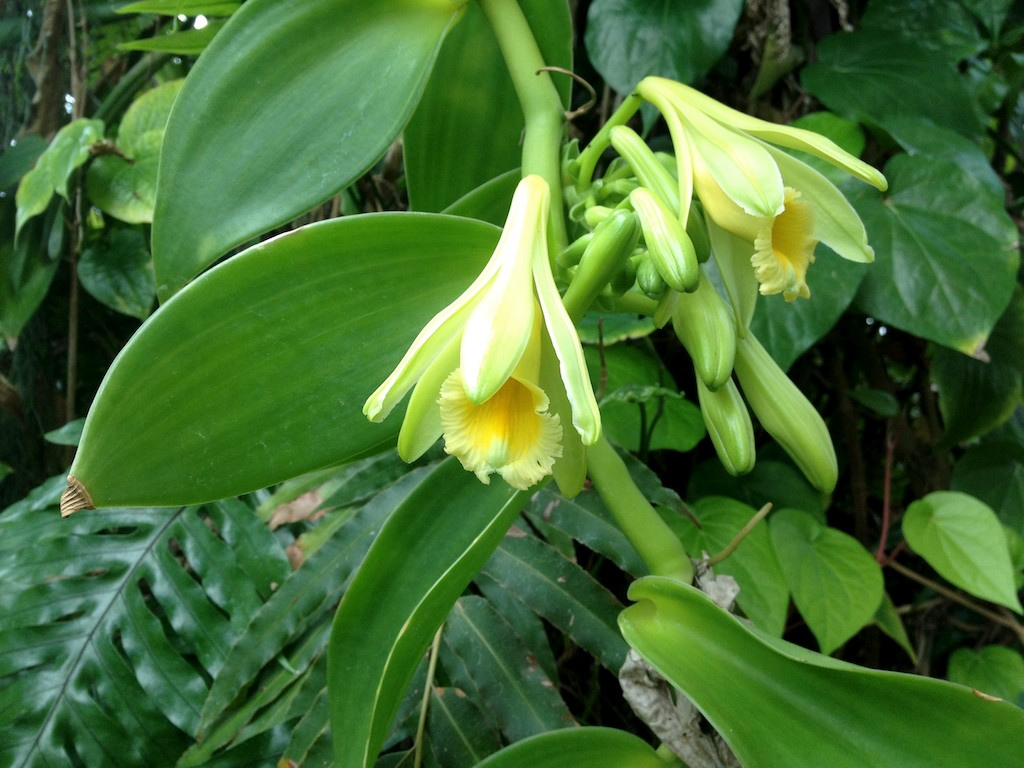
Iris is so versatile and “plays well” with many other perfume ingredients and accords. I particularly enjoy these combinations:
- Iris and Mysore sandalwood: These ingredients are made for each other, particularly when the perfumer emphasizes the creamy aspects of these ingredients.
- Iris and vanilla: An extremely popular combination that I can’t get enough of.
- Iris and citrus: Go for this pairing if you like your fragrances to feel fresh, clean and uplifting.
- Iris and ylang ylang: This pairing appears often in vintage iris perfumes. The combination creates a zingy fragrance, with lively floral heart.
Which iris-based fragrances are your all-time favorites?
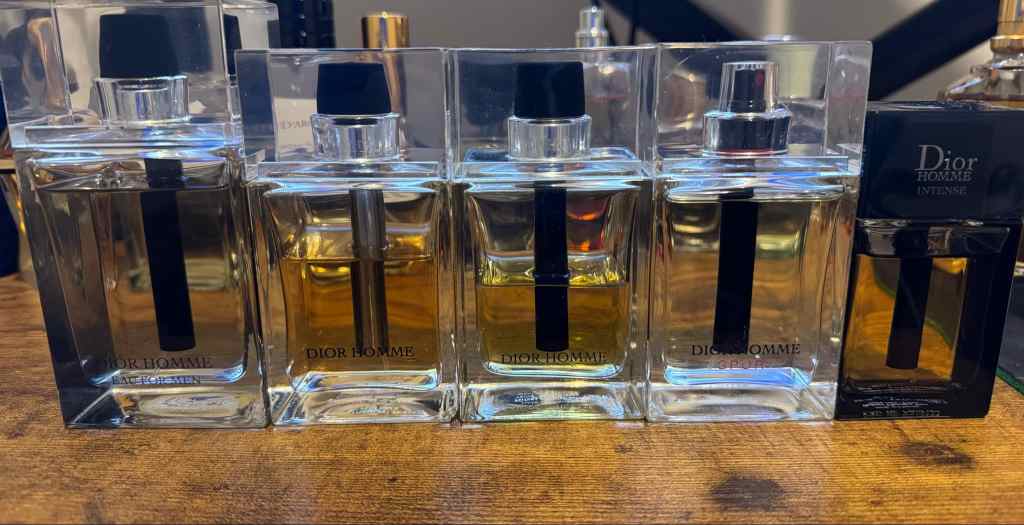
I’ve developed a deep appreciation…and a rather large collection of iris-based fragrances. A few of my favorites include:
- Dior Homme Eau for Men: This discontinued fragrance is a personal favorite, offering a citrusy, woody iris experience.
- Dior Homme (Silver Stem): I have a bottle of this from 2009 and it’s another exceptional offering from the Dior Homme line. It showcases a powdery, elegant facet of iris. According to Jamie Frater, the 2005 version contained 0.25% pure iris absolute.
- Elixir Attar Poudre Bois d’Iris: This is my holy grail iris scent. Elixir Attar calls it that on their website too. It’s luxurious, creamy, rich, and almost gourmand in its interpretation.
- Guerlain Samsara: Iris isn’t the most prominent note in this perfume, but it contributes to the fragrance’s overall elegance. I have a vintage bottle from the late 1980s or early 1990s.
- Dior Bois d’Argent: A modern classic, well-balanced, easy-to-wear, and versatile.
I prefer iris fragrances that lean towards the creamy and powdery side. I’m particularly drawn to fragrances that highlight iris rather than blending it into the background.
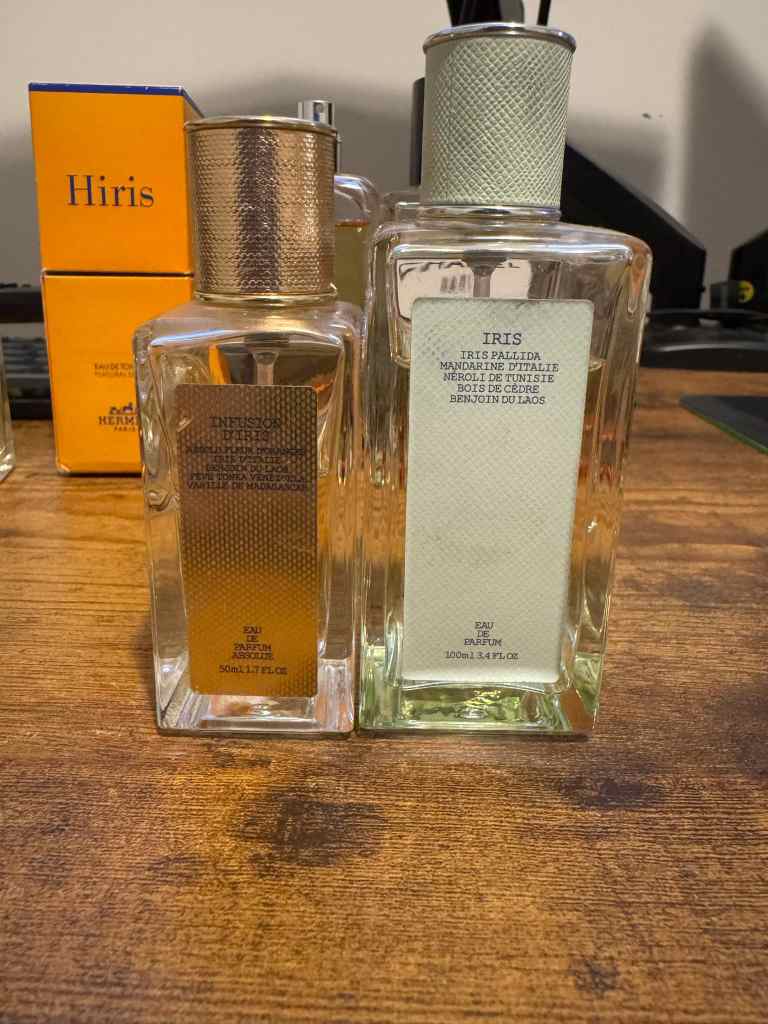
One aspect of iris I’m starting to explore is “lipsticky” iris, which has a powdery-waxy texture. Classics in this category include Prada Infusion d’Iris and Lipstick Rose by Frederic Malle.
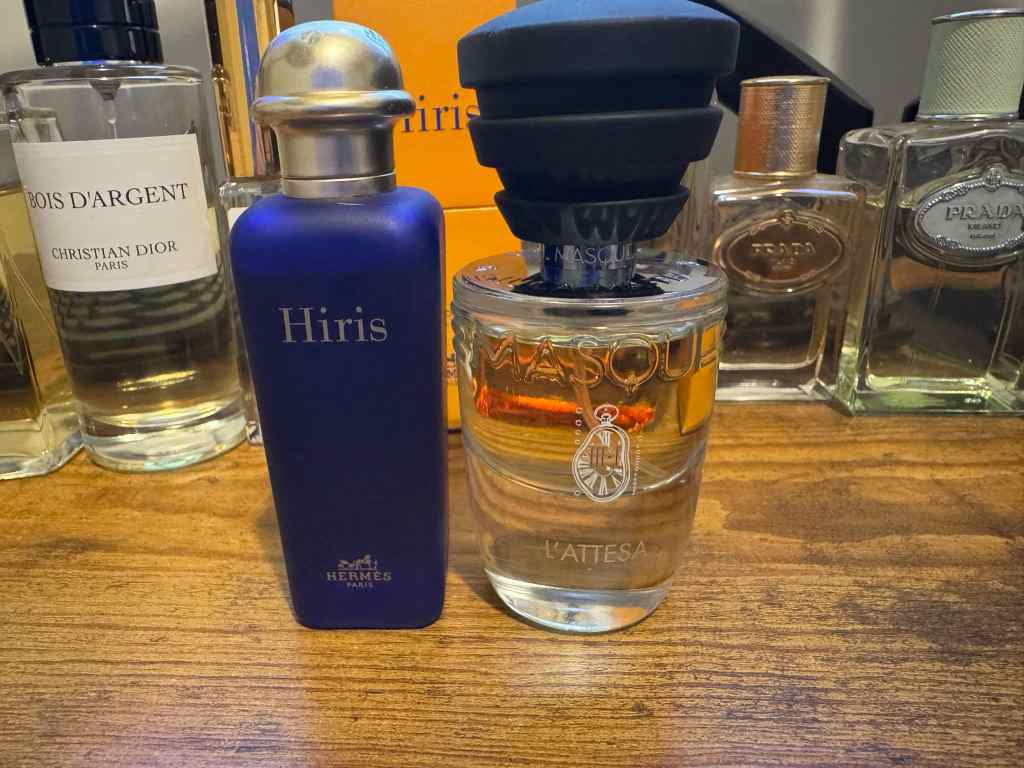
For those who want to explore the cold, rooty, or vegetal aspects of iris, I recommend exploring fragrances like Hermes’ Hiris and Masque Milano’s L’Attesa. These fragrances offer an experience I consider more challenging, but that might make others feel right at home.
Can you recommend some lesser-known iris treasures?
I have to mention the legendary L’Iris Gris by Jacques Fath, recently reborn as L’Iris de Fath—which I’ve never tried, but hope to sample someday. This perfume is talked about with reverence in the online fragrance community. Relatively few enthusiasts have tried this perfume, though, because vintage bottles are rare and the modern extrait is incredibly expensive (nearly $1,400). Thankfully, Fath recently started selling a limited supply of 4 ml bottles, which enables more enthusiasts to try it before buying (or, let’s be real, to try it and dream of buying). The company also recently released an edp formulation at a more accessible price point.
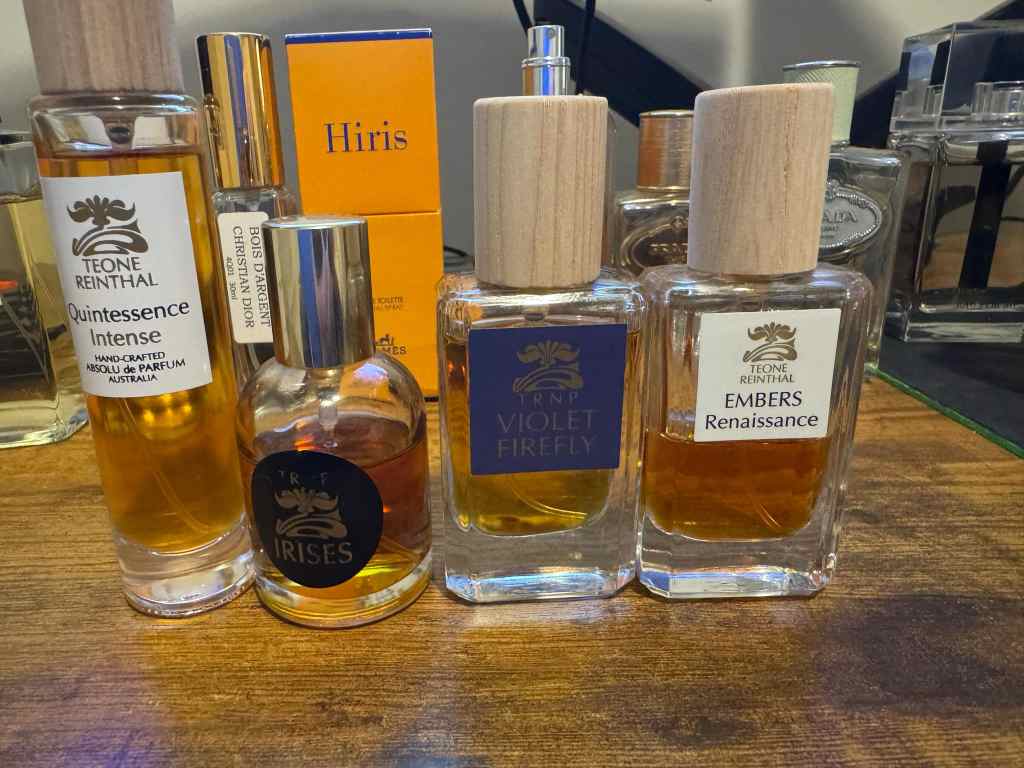
Teone Reinthal, a natural perfumer from Australia, has also created outstanding iris-forward fragrances. These perfumes can be hard to come by outside Australia, but are worth the hunt. My favorites are Embers Renaissance, a gorgeous blend of iris and Indian sandalwood, and Irises, a richly earthy iris perfume.
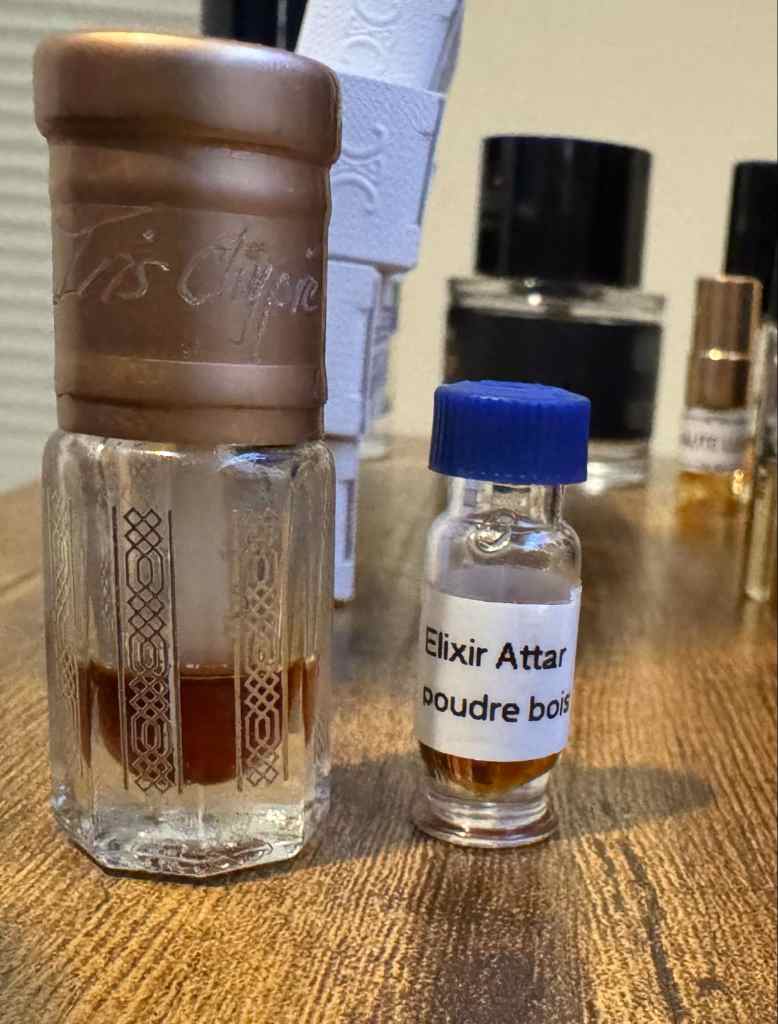
Lastly, I’d like to mention my other favorite from Elixir Attar, Iris Chypre. It’s a rich, spicy, almost chocolatey interpretation of iris.
If you could go back in time to try iris fragrances for the first time, what advice would you give yourself?
First of all, I would tell myself to challenge my preconceived notions about iris. It’s not just for older generations and is not inherently masculine or feminine. Give iris a chance and you’ll realize how versatile it is and how enjoyable it is to wear.
Looking back, I’m glad I started by exploring the Dior Homme line and other accessible designer fragrances. I would tell myself to do that again. There are a lot of amazing offerings here at an accessible price point.
Later, when I’m ready to branch out (and have the budget to do so), I would encourage myself to try the iris offerings in designer private lines, such as La Collection Privee Christian Dior, Les Exclusifs de Chanel, Guerlain L’Art & La Matiere Collection, and the Hermessence Collection. These houses know what they’re doing and I would learn a lot by seeing how these brands take their craft to the next level. This is also a good time to try vintage classics, such as Guerlain L’Heure Bleue and Chanel No. 19.
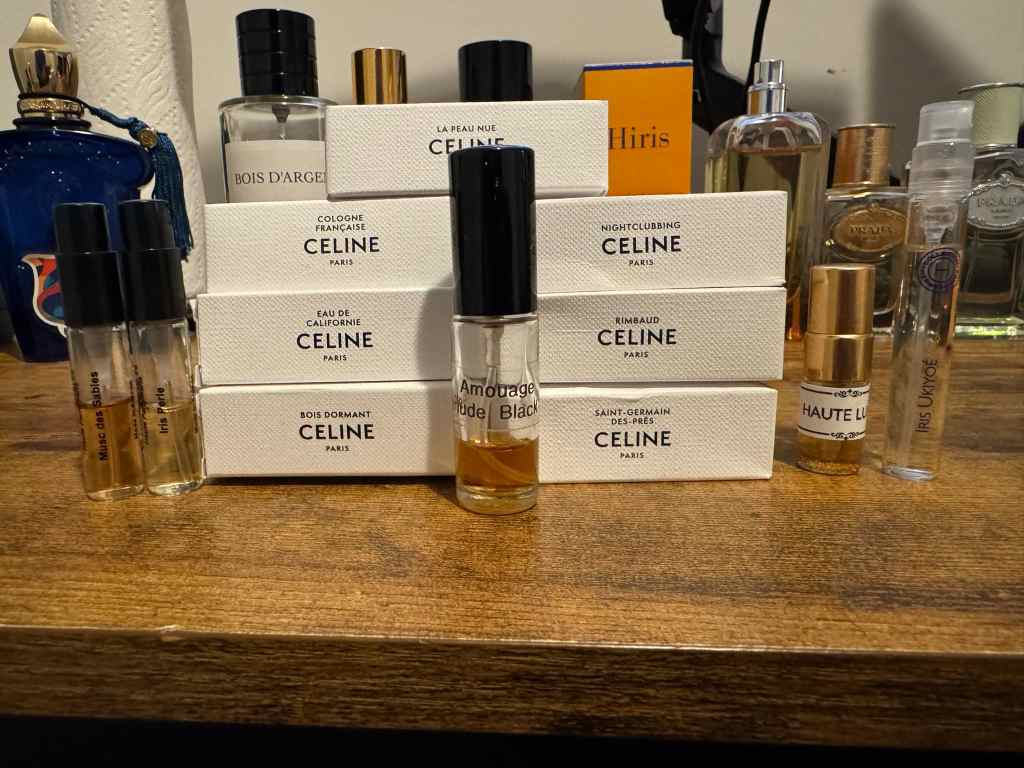
When I feel ready for an adventure, the indie and niche scenes will be ready for me. Here I’ll have the chance to explore interpretations of iris I could never have imagined: Amouage Interlude Black Iris with its tart violet and smoky incense, Roja Haute Luxe‘s incredible olfactory complexity, Teone Reinthal’s quirky creations, and Elixir Attar’s intense oils.
I’d remind myself to take it slow and learn what I like. The key to appreciating iris in perfume is to be guided by my own nose and embrace the interpretations that work for me.
The header image is a royalty free photo from Pixabay. Unless otherwise noted, all other photos were provided courtesy of John Van.
Like what you read here? Please subscribe to my blog or share it with a friend.






 Fragrances With Friends